
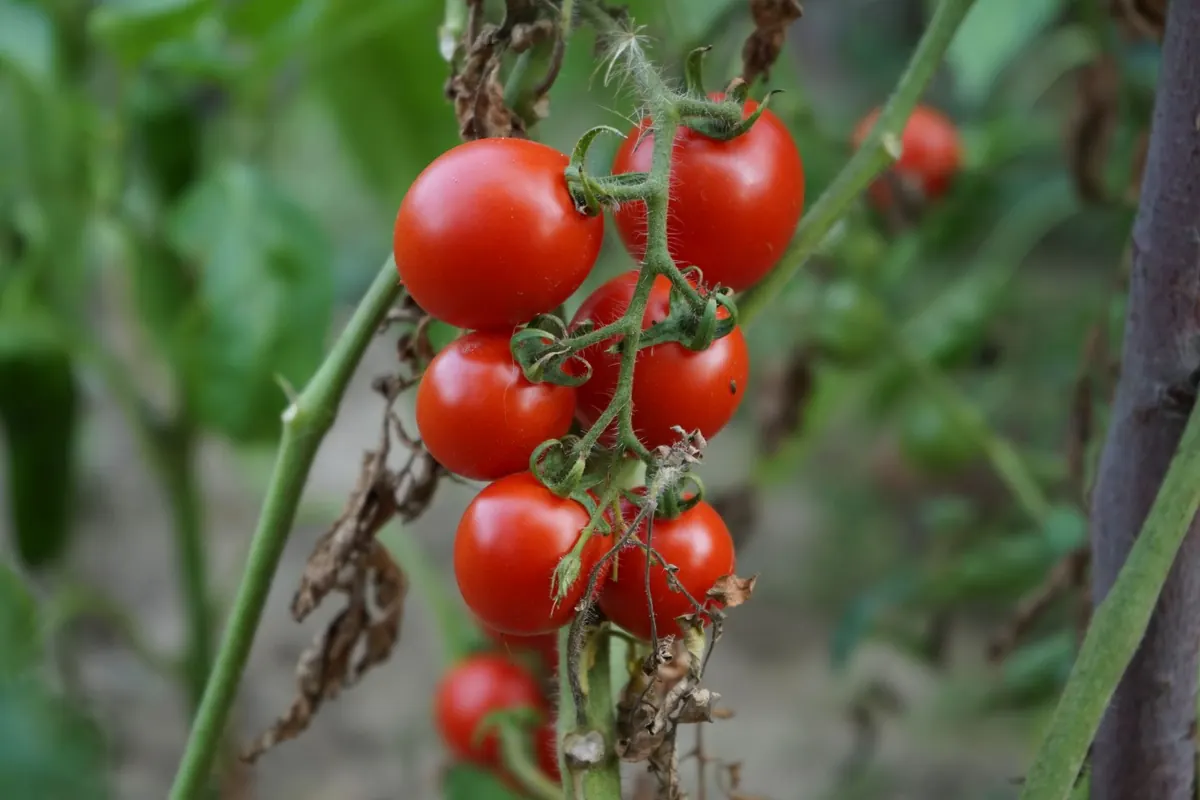

You head out with a colander on a warm July morning, and there it is: a perfect beefsteak with a fresh crack down its shoulder, or a cherry tomato split wide open and still hanging on the vine. Splitting is the most common complaint in home tomato patches, and it is nearly always fixable. The fruit isn't diseased and the plant isn't doomed. It's a watering and timing problem, and once you understand how it works you can head off most of it.
What Actually Happens When a Tomato Splits
Tomato skin stops stretching long before the inside stops growing. The fruit keeps pulling water in through the stem, the cells in the flesh swell, and if the skin can't keep up, it tears. That's the whole mechanism.
Two crack patterns show up most often. Radial cracks run out from the stem end like spokes on a wheel. Concentric cracks form rings around the shoulder of the fruit. Radial splits tend to follow a heavy soaking after a dry spell. Concentric cracking often comes with fast, steady growth and wide swings between day and night temperatures. Neither is a pest or a disease, and the plant will keep producing. The damaged fruit just won't keep.
Watering Swings Are the Usual Suspect
If you change one thing this season, change this: stop the feast-or-famine watering. A plant left dry for five days and then drenched has exactly the conditions that split fruit — a sudden flood of water moving into a tomato whose skin has finished growing.
Aim for Even, Not Constant
In the ground, that usually means a slow, deep soak every few days rather than a light sprinkle every morning. Push a finger into the soil near the plant. If the top inch or so is dry, water slowly until it soaks down several inches. Water early in the day so the plant has time to move it before the heat arrives, and try to water the soil rather than the leaves.
Mulch Does Half the Work
Two to three inches of straw, shredded leaves or compost keeps rain from hammering bare soil and slows evaporation between waterings. Keep it a couple of inches back from the stem so the base of the plant stays dry and airy.
Drip Beats the Hose
A soaker hose or drip line delivers water slowly and evenly. An overhead sprinkler dumps a lot at once, wets the foliage, and often runs off before it reaches the roots.
Even moisture is the goal. Not wet soil, not dry soil — moisture that doesn't change much from one day to the next.
Weather You Can't Control
Some years the sky does the swinging for you. A long dry stretch followed by a two-inch downpour will crack tomatoes in almost any garden, no matter how carefully you watered. Cool nights paired with hot days do their own damage.
You can't stop the rain, but you can plan around it. Watch the forecast. If heavy rain is coming and the fruit is full size and starting to colour, pick it at the breaker stage — when it shows its first blush — and let it finish ripening on the kitchen counter. Tomatoes ripen fine off the vine, and a counter-ripened tomato beats a split one every time.
Variety Choice Does a Lot of the Work
Some tomatoes split if you look at them wrong. Thin-skinned heirlooms, big beefsteaks and many cherry types crack readily, because their skins are delicate and their fruit grows fast. Paste and plum tomatoes, along with modern hybrids bred for crack resistance, have thicker skins and expand more slowly.
If splitting has ruined your harvest two years running, plant one paste variety and one hybrid alongside your favourite heirloom. You keep the flavour you love and give yourself a backup crop. Breeders usually list crack resistance in variety descriptions, so it's worth reading the catalogue rather than grabbing whatever looks good on the shelf.
Smaller Habits That Add Up
- Ease off high-nitrogen fertiliser once fruit has set. It pushes leafy growth and fast fruit expansion.
- Don't over-prune. Leaves shade the fruit and help the plant buffer water stress.
- Protect the roots. Hoeing close to the stem or letting a container bake dry causes the same boom-and-bust cycle.
- Give containers room. A large pot with plenty of compost holds moisture far better than a small one, and a self-watering pot is a genuine help.
- Expect more trouble late in the season, as temperatures drop and growth gets uneven.
One problem worth separating out: a sunken, leathery black patch on the bottom of the fruit is blossom end rot, not cracking. It's a calcium uptake issue and it's managed differently, usually by watering more evenly. Same plant, different problem.
If a Tomato Has Already Split
Small cracks are not a reason to throw the fruit away. Use those tomatoes first. They won't store, but they're fine for sauce, soup, roasting or eating the same day. Cut away the split section, and if you see fuzz or mould, discard the whole fruit.
Pick split fruit off the vine rather than leaving it there. Open flesh attracts fruit flies and invites rot that can spread to healthy tomatoes nearby. And resist the urge to give the plant a big drink as an apology — a steady, moderate watering is what it actually needs.
The Routine That Prevents Most Cracking
- Mulch the bed two to three inches deep when you plant.
- Water deeply and less often, in the morning, checking the soil first.
- Switch to drip or a soaker hose where you can.
- Feed lightly, and stop the nitrogen once fruit is sizing up.
- Harvest at first colour when heavy rain is forecast.
- Plant at least one thicker-skinned variety alongside your favourites.
Do those six things and you'll still see the odd crack in a strange weather year — no garden escapes that entirely. But you'll stop losing fruit to something preventable, and that's most of what a good tomato season comes down to: steady water, decent soil, and picking a little earlier than you think you should.
Photo: Nicolae Holbea / Pexels
Related posts
More stories you’ll love reading